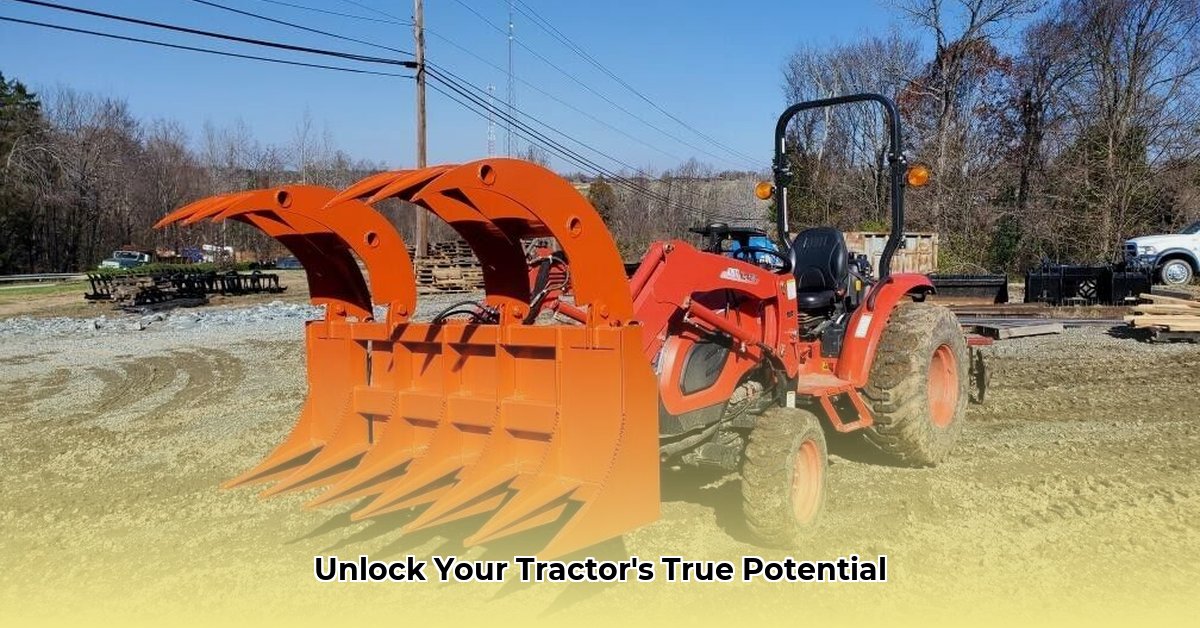
Picking the right root grapple for your tractor is crucial for efficient and safe operation. This guide provides a comprehensive walkthrough, helping you select the perfect grapple for your needs and budget. We’ll cover grapple types, sizing, specifications, safety, installation, maintenance, and budgeting – ensuring you make an informed decision. For more detailed information on tractor grapples, check out this helpful resource: Tractor Grapple Guide.
Understanding Your Needs: Defining the Scope of Work
Before exploring specific models, clearly define your primary use case. Will you primarily clear land overgrown with brush and roots? Or are you focusing on moving debris after a storm or handling various materials on your farm? The answer significantly impacts the type of grapple you need. For example, clearing dense woods needs a different grapple than handling hay bales. Consider the size, type, and density of materials you will frequently handle.
Matching Grapple to Tractor Capacity: A Crucial Consideration
The size and weight of your chosen grapple must align perfectly with your tractor's capabilities. A grapple too heavy will strain your tractor's hydraulic system, potentially causing damage. Conversely, a grapple too small will be inefficient and frustrating. Consult your tractor's owner's manual for its hydraulic flow rate and lift capacity. This is fundamental for safe and efficient operation; ignoring it can lead to costly repairs and dangerous situations. What is your tractor's maximum lifting capacity, and what hydraulic flow rate does it deliver?
Decoding Grapple Specifications: Understanding the Key Features
Once you've assessed your needs and tractor capabilities, understanding grapple specifications is critical. These details differentiate models and determine their suitability for various tasks.
Tine Design: The Grasp of the Grapple
Tine design describes the shape and arrangement of the grapple's claws. Root rakes have widely spaced tines, ideal for pushing large volumes of material like dense brush or leveling ground. Long-bottom grapples have closely spaced tines and a longer bottom jaw, better for lifting and cradling smaller, more delicate items. Which tine design best suits your material handling needs—wide space for bulk movement or close spacing for precise work?
Jaw Opening: Determining Material Handling Capacity
Jaw opening refers to the maximum width the grapple can span. A wider opening handles larger bundles, while a narrower opening offers greater precision for smaller materials. What is the typical size of the materials you will grapple, and what jaw opening is necessary to accommodate them effectively?
Material Composition: Durability and Longevity
Grapples are typically made from high-strength steel alloys, such as Hardox AR450 (an extremely tough, wear-resistant steel) or DOM (drawn-over-mandrel) round tubing (a strong and versatile option). The material significantly affects the grapple's strength, longevity, and cost. Consider the trade-off between durability and cost when selecting the appropriate material composition.
Here's a summary table showcasing key differences:
| Feature | Root Rake | Long-Bottom Grapple |
|---|---|---|
| Primary Use | Pushing/clearing large debris | Lifting/handling smaller items or precise work |
| Tine Design | Widely spaced, for pushing and moving | Closely spaced, for gripping and lifting |
| Jaw Opening | Typically wider | Often narrower |
| Material Handling | Less precise, high volume | More precise, delicate items |
Safety First: Prioritizing Safe Operating Procedures
Safety is paramount when using heavy equipment. Follow these critical steps:
- Weight Distribution: Maintain an even weight distribution on your tractor to prevent tipping, especially on uneven ground or with heavy loads.
- Operating Procedures: Always follow the manufacturer’s instructions precisely. These instructions outline safe and efficient operating procedures.
- Regulations: Check local regulations and safety standards for operating agricultural equipment to avoid potential penalties or legal issues. Is your operation in compliance with all relevant safety regulations?
Installation and Maintenance: Prolonging the Life of Your Grapple
Installation typically involves attaching the grapple to your tractor's three-point hitch. Refer to the manufacturer’s instructions for detailed guidance. Regular maintenance significantly extends the grapple's lifespan. Regularly inspect for wear and tear, lubricate moving parts, and tighten loose components to prevent costly repairs down the line. How often will you inspect your grapple for wear and tear, and what is your maintenance schedule?
Budgeting: The Cost of Ownership
Grapple prices vary based on size, features, and materials. Smaller, simpler grapples are more affordable, while larger, heavier-duty models can be significantly more expensive. Factor in both the initial purchase price and the ongoing costs of maintenance and potential repairs. What's your budget, and how does it affect your choice of grapple type and features?
Choosing the Right Grapple Type: A Comparative Analysis
Different grapple types cater to specific needs:
| Grapple Type | Pros | Cons | Best Suited For |
|---|---|---|---|
| Root Rake | Ideal for root and debris removal | Less precise than other grapple types | Land clearing, root removal |
| Long-bottom Grapple | Versatile, good for various materials | Can be heavy and require more power | Handling diverse materials, demolition |
| Short-bottom Grapple | Compact, suitable for tight spaces | Less capacity than long-bottom grapples | Working in confined areas |
By carefully considering your needs, tractor capabilities, and budget, you can choose the right root grapple. This investment enhances efficiency, improves safety, and ensures long-term value for your farming or land management operations.